
Indonesia likely to miss fiscal target in 2023
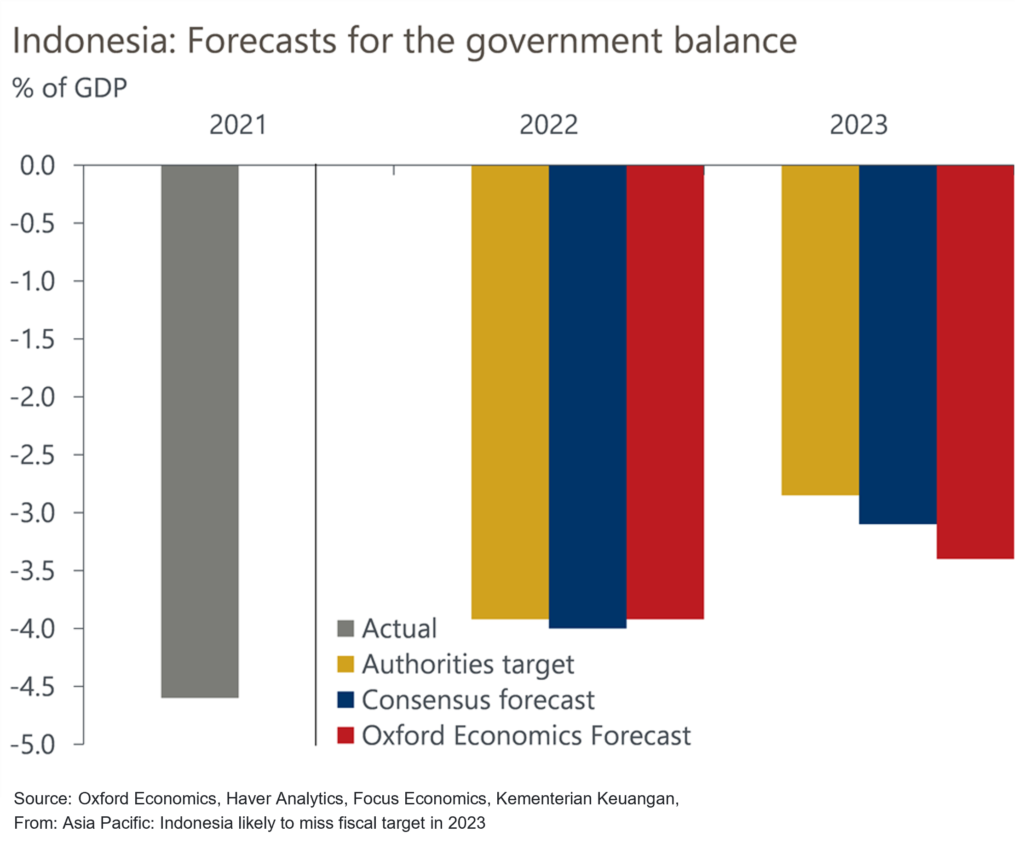
We expect Indonesia’s budget balance to show a large deficit in H2 of this year as the cost of fuel subsidies is finally reflected in the fiscal accounts. And we forecast the budget deficit to narrow to 3.4% of GDP in 2023 from 3.9% this year, versus the government target of 2.85%.
What you will learn:
- This year, Indonesia recorded its first H1 budget surplus since 2011 with recent figures showing continued surplus in July and August. The marked turnaround in the fiscal position so far this year is down to both soft expenditure and soaring revenues. But the data do not give a full picture of the underlying fiscal situation.
- The issue is that much of the cost of fuel subsidies is yet to be reflected. In Indonesia, most subsidies are delivered through administered prices. The state-owned distributors are then reimbursed by the government for their losses, usually at the end of the year or in the following year.
- We believe Indonesia’s government fiscal consolidation in 2023 likely to fall short of plans. The subsidy bill is likely to fall more slowly than the government is expecting in its 2023 budget, based on our higher assumption for global oil prices. In addition, the government’s revenue projections look too optimistic, with tax collection forecasts not fully reflecting the likely negative impact of the recent fuel price hike on GDP growth.
Tags:
Related Resouces

Post
The economics of data sovereignty and data localisation mandates
As governments across Asia race to build digital economies, the question of where data lives has become one of the region’s most economically consequential policy debates.
Find Out More
Post
Navigating Tax Policy: How Economics Gives International Businesses Strategic Advantage in Asia
In Asia’s fast-changing economic and regulatory environment, tax policy is no longer just a matter for finance and legal departments—it’s a boardroom issue.
Find Out More
Post
New Rules of Engagement: The Strategic Rise of Government Affairs in Asia
What’s behind Asia’s new era of policy assertiveness? What does it mean for international firms?
Find Out More