
Recent Release | 19 May 2021
Chipping In: The U.S. Semiconductor Industry Workforce and How Federal Incentives Will Increase Domestic Jobs

Economic Consulting Team
Oxford Economics
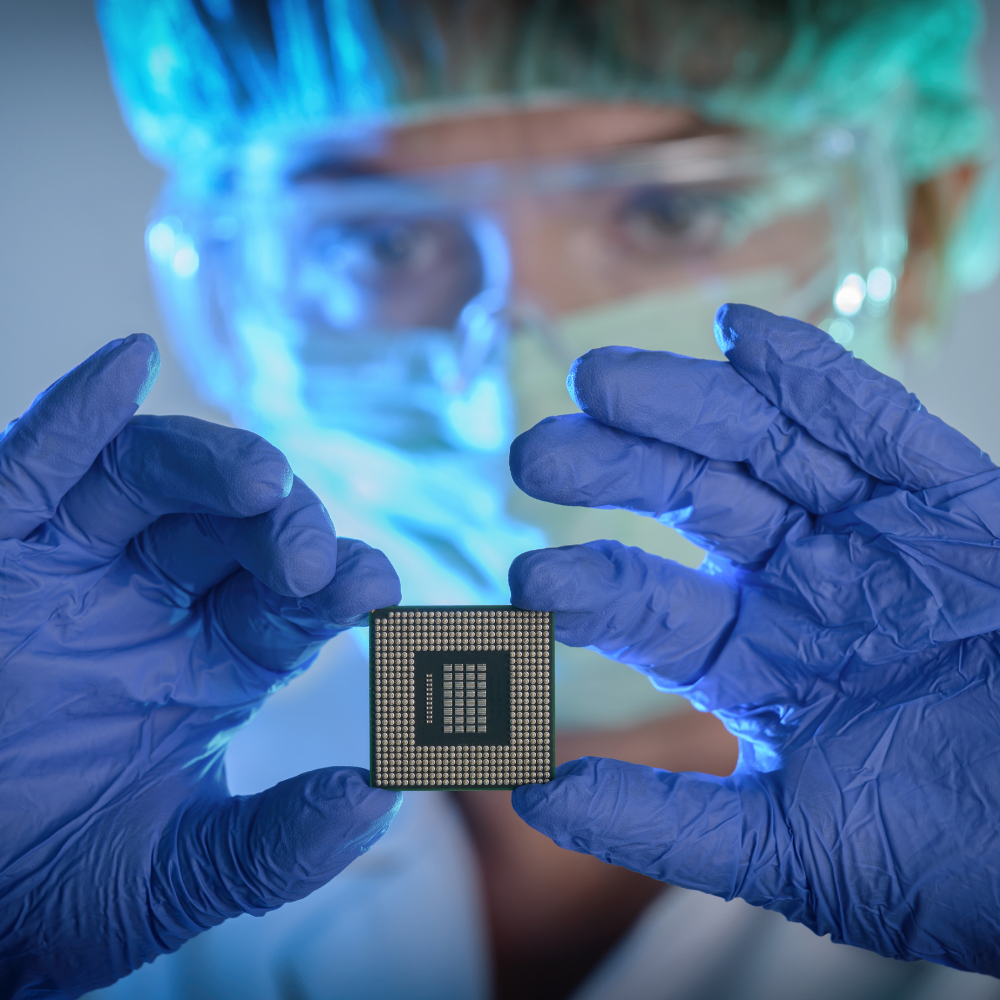
With its origins in the latter part of the 20th century, the semiconductor industry has grown to become one of the most important segments of the global economy. Today, semiconductors are found in nearly every electronic device, including phones, cars, and appliances. Semiconductors enable nearly every industry, reflected by global sales of over $440 billion in 2020 alone.
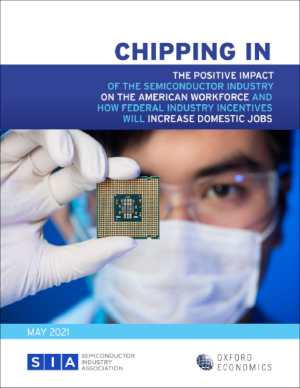
Today, semiconductor companies are producing more chips than ever before. The success and growth in computers and software have subsequently helped to drive growth in the semiconductor industry. The U.S. semiconductor industry is substantial, directly contributing $246.4 billion to U.S. GDP and directly employing over 277,000 workers in 2020. However, the economic contribution of the semiconductor industry extends far beyond fabrication facilities (fabs) or research facilities where its products are designed and manufactured. The strong demand for all types of chips facilitates the need for a broader domestic support ecosystem including manufacturing equipment, materials, design services, testing labs, and R&D activity. This ecosystem creates activities that generate additional economic value throughout the U.S. economy.
For this study, Oxford Economics has quantified the economic contribution of the U.S. semiconductor industry by using an economic impact analysis at the national level in the U.S. This technique highlights the importance of the semiconductor industry to the U.S. economy in terms of jobs, wages, and GDP.
About the team
Our Economic Consulting team are world leaders in quantitative economic analysis, working with clients around the globe and across sectors to build models, forecast markets and evaluate interventions using state-of-the art techniques. Lead consultants on this project included:
Related Services
Post
KPMG M&A Outlook 2026: Between Uncertainty, Resilience, and Seizing Opportunities
Discover how Germany’s M&A landscape is evolving – with a focus on growth, AI and post-merger value creation.
Find Out More
Post
Silver, the next generation metal
This report highlights the critical role silver plays in data centres and artificial intelligence (AI), automotive and electric vehicles (EVs), and solar energy photovoltaics (PVs). With these sectors expected to expand significantly over the coming years, we expect future silver demand to be strong.
Find Out More
Post
Powering the UK Data Boom: The Nuclear Solution to the UK’s Data Centre Energy Crunch
The UK’s data centre sector is expanding rapidly as digitalisation, cloud computing, and artificial intelligence (AI) drive surging demand for high-performance computing infrastructure.
Find Out More