

Research Briefing
| Dec 17, 2021
Africa Watchlist 2022
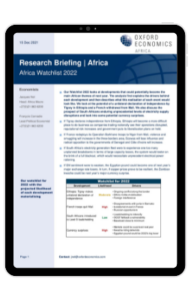
Our Watchlist 2022 looks at developments that could potentially become the main African themes of next year. We look at the potential of a unilateral declaration of independence by Tigray in Ethiopia and a French withdrawal from Mali. We also discuss the prospect of South Africans enduring unprecedented levels of electricity supply disruptions and look into some potential currency surprises.
What you will learn:
- If France redeploys its Operation Barkhane troops to Niger from Mali, violence and smuggling will increase in the three-borders area, Ecowas will lose influence and radical opposition to the governments of Senegal and Côte d’Ivoire will increase.
- If South Africa’s electricity generation fleet were to experience one too many unplanned breakdowns in terms of large capacity losses, the system would teeter on the brink of a full blackout, which would necessitate unprecedented electrical power rationing.
- If EM sentiment were to weaken, the Egyptian pound could become one of next year’s major exchange rate losers. In turn, if copper prices prove to be resilient, the Zambian kwacha could be next year’s major currency surprise.