
How much could trade policy uncertainty hurt the outlook?
If there’s one thing more damaging than tariffs themselves, it’s the sharp rise in trade policy uncertainty. Our latest assessment shows that sharp rise in trade policy uncertainty and broader global policy uncertainty is likely to significantly harm global growth, particularly business investment, with repercussions in the US, Europe and China.
There is extensive academic literature and evidence that elevated uncertainty with downside risks is bad for economic growth. The key point is that many major decisions for households and businesses are costly to reverse. For firms, this might include investment, hiring, R&D, and entering a new market, while for consumers, it might include house purchase and major durable goods. When uncertainty is high, there may be a strong incentive to defer such major decisions until the situation is clearer, especially if the scale of downside risks is large.
We developed four distinct scenarios for trade policy uncertainty (TPU), assessing their effects on private business investment in major economies. In all scenarios, investment is markedly weaker during this year from the recent rise in uncertainty.
Download the executive summary of our report to learn:
- How will trade policy uncertainty shape the global growth outlook?
- How will investment in major economies be affected by trade policy uncertainty?
- If trade policy uncertainty stays at its heightened levels throughout the next few years, what would be the consequences?
Tags:
Related Reports

Tariffs take a toll despite easing trade hostilities
Global tradeflows remain under pressure despite easing tariff tensions. Recent US–China agreements reduce select import taxes and support China’s 2026 outlook, yet US imports continue to fall and supply chains pivot toward Asia and Europe. Containerised trade is set to expand, while bulk shipments soften alongside weaker industrial demand.
Find Out More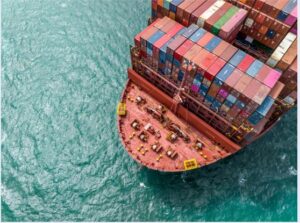
Global trade is losing momentum
Trade disruptions spread across autos and pharma sectors, with EU tariff exemptions giving Europe a competitive edge amid global slowdown.
Find Out More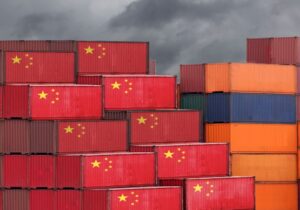
Why have China’s exports held up so well under higher US tariffs?
China's exports have adapted, rather than retreated, under higher US tariffs. It will be difficult for businesses and consumers to decouple from Chinese exports or China-linked supply chains.
Find Out More
ASEAN growth opportunities following US-China Tariffs
Using sectoral production data from Oxford’s Global Industry Service, we have been able to quantify which countries and sectors have the greatest potential for production migration. Applying this framework across Asia reveals meaningful industrial depth in Vietnam, Thailand, and Malaysia in trade-intensive segments, and a distinctive, more resource-heavy footing in Indonesia and India.
Find Out More