
Research Briefing
| Apr 24, 2024
Demographics are set to propel niche property types in the UK
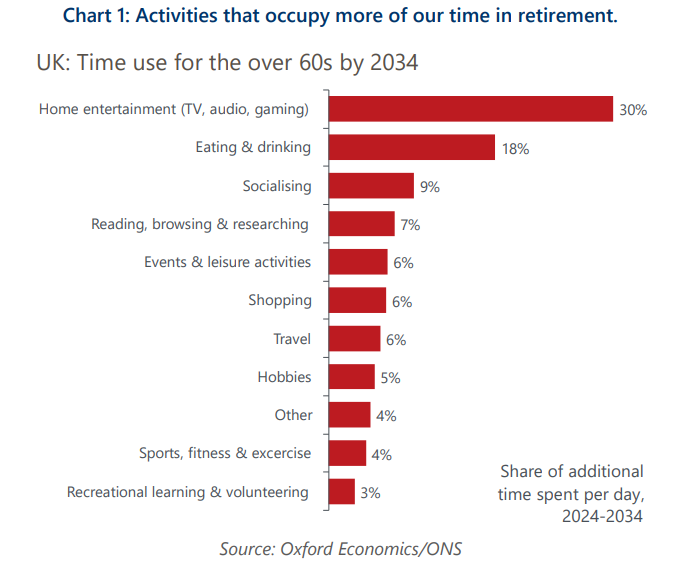
How we spend our time varies through our lives. As the UK population ages, time-use data suggest that the property sectors with structural tailwinds will be those that provide space for activities related to home entertainment, eating and drinking, socialising, events, leisure, hobbies, and sports/exercise.
What you will learn:
- Growth in the digital economy threatens the demand for physical space across various sectors. Retail and offices face well-known challenges from e-commerce and home working, while generative artificial intelligence has the potential to further disrupt demand for offices and life sciences.
- The interplay between the two megatrends of AI and demographics increases the importance of understanding the daily activities that people spend their time on, and require physical space to facilitate, whilst accounting for the effects of population ageing.
- Our approach identifies the daily activities that will become more important over the next decade, and could help achieve benchmark outperformance over the long run.
Tags:
Related Reports
Click here to subscribe to our real estate economics newsletter and get reports delivered directly to your mailbox

Real Estate Key Themes 2026: CRE deal recovery delayed, not derailed
Real estate is still poised for a revival in 2026. Although 2025’s deal recovery was delayed, the key fundamentals remain in place for renewed momentum.
Read more: Real Estate Key Themes 2026: CRE deal recovery delayed, not derailed

Inflation and bond yield shocks in Europe affect RE returns the most
Our modelling shows European real estate is most exposed to inflation and bond-yield shocks, with impacts varying widely across cities and sectors.
Read more: Inflation and bond yield shocks in Europe affect RE returns the most

2026 US real estate supply outlook
Explore how shifting supply trends are shaping industrial, office, retail and residential real estate in 42 US metros. Download our infographic today.
Read more: 2026 US real estate supply outlook

Real Estate Trends and Insights
Read more analysis on real estate performance and location decision-making.
Read more: Real Estate Trends and Insights[autopilot_shortcode]