
North America Housing affordability fell in Q2 and is likely to worsen
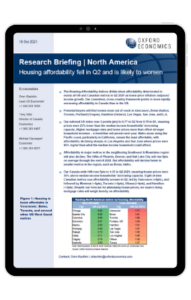
The Housing Affordability Indices (HAIs) show affordability deteriorated in nearly all US and Canadian metros in Q2 2021 as home price inflation outpaced income growth. Our consistent, cross-country framework points to more rapidly worsening affordability in Canada than in the US.
What you will learn:
- Potential buyers will find homes most out of reach in Vancouver, Boise (Idaho), Toronto, Portland (Oregon), Hamilton (Ontario), Las Vegas, San Jose, and L.A.
- Our national US index rose 3 points (pts) to 0.77 in Q2 from 0.74 in Q1, meaning prices were 23% lower than the median income households’ borrowing capacity. Higher mortgage rates and home prices more than offset stronger household incomes – a trend that will persist next year.
- Affordability in major metros in the neighboring Southwest & Mountains region will also decline. The HAIs of Phoenix, Denver, and Salt Lake City will rise 6pts on average through the end of 2022.
Tags:
Related Services

Post
APAC Key Themes 2026: Paybacks, policy offsets and trade
We believe APAC will remain the strongest global performer in 2026. However, the growth trajectory will likely be more uneven than in past cycles.
Find Out More
Post
Japan’s fiscal policy will remain loose, which increases risks to debt sustainabilit
We've changed our fiscal outlook for Japan in our December forecast round. We now expect the new government to set a primary deficit close to that of 2024, at 2%-3% of GDP for 2025-2027, instead of restoring a balanced budget by taking advantage of strong tax revenue. We assume higher bond yields will force the government to take measures to reduce the deficit from 2028.
Find Out More