
UK | MPC’s hawkish shift puts spotlight on reversing QE
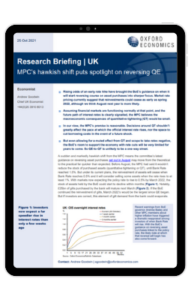
Rising odds of an early rate hike have brought the BoE’s guidance on when it will start reversing course on asset purchases into sharper focus. Market rate pricing currently suggest that reinvestments could cease as early as spring 2022, although we think August next year is more likely.
What you will learn:
- Assuming financial markets are functioning normally at that point, and the future path of interest rates is clearly signalled, the MPC believes the
macroeconomic consequences of quantitative tightening (QT) would be small. - In our view, the MPC’s premise is reasonable. Decisions around QT shouldn’t greatly affect the pace at which the official interest rate rises, nor the space to cut borrowing costs in the event of a future shock.
- But even allowing for a muted effect from QT and scope to take rates negative, the BoE’s room to support the economy with rate cuts will be very limited for years to come. So QE-to-QT is unlikely to be a one-way street.
Tags:
Related Services

Post
APAC Key Themes 2026: Paybacks, policy offsets and trade
We believe APAC will remain the strongest global performer in 2026. However, the growth trajectory will likely be more uneven than in past cycles.
Find Out More
Post
Japan’s fiscal policy will remain loose, which increases risks to debt sustainabilit
We've changed our fiscal outlook for Japan in our December forecast round. We now expect the new government to set a primary deficit close to that of 2024, at 2%-3% of GDP for 2025-2027, instead of restoring a balanced budget by taking advantage of strong tax revenue. We assume higher bond yields will force the government to take measures to reduce the deficit from 2028.
Find Out More