
Australian vehicle sales to ease as demand fades and inventories restock
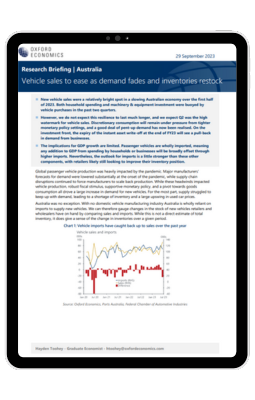
Global passenger vehicle production was heavily impacted by the pandemic. Major manufacturers’ forecasts for demand were lowered substantially at the onset of the pandemic, while supply chain disruptions continued to force manufacturers to scale back production. While these headwinds impacted vehicle production, robust fiscal stimulus, supportive monetary policy, and a pivot towards goods consumption all drove a large increase in demand for new vehicles. For the most part, supply struggled to keep up with demand, leading to a shortage of inventory and a large upswing in used car prices.
This research report expands on the following points:
- New vehicle sales were a relatively bright spot in a slowing Australian economy over the first half of 2023. Both household spending and machinery & equipment investment were buoyed by vehicle purchases in the past two quarters.
- However, we do not expect this resilience to last much longer, and we expect Q2 was the high watermark for vehicle sales. Discretionary consumption will remain under pressure from tighter monetary policy settings, and a good deal of pent-up demand has now been realised. On the investment front, the expiry of the instant asset write-off at the end of FY23 will see a pull-back in demand from businesses.
- The implications for GDP growth are limited. Passenger vehicles are wholly imported, meaning any addition to GDP from spending by households or businesses will be broadly offset through higher imports. Nevertheless, the outlook for imports is a little stronger than these other components, with retailers likely still looking to improve their inventory position.
Tags:
Related Services

Post
Student housing makes the grade in Australia
Rising student demand and limited housing availability are pushing rents higher and reinforcing investor confidence in Australia’s student accommodation market.
Find Out More
Post
Australia’s Infrastructure Outlook: Big Shifts, Bigger Challenges
Australia’s infrastructure landscape is shifting fast, driven by new investment trends, emerging asset classes and growing capacity constraints. This outlook explores the major changes ahead and what industry and government must do to navigate the decade effectively.
Find Out More
Post
Wage growth stable, but divergence under the hood in Australia
Wage growth held steady in Q3, reinforcing a still-tight labour market. But with conditions set to soften, we expect unemployment to rise and wage pressures to ease through next year.
Find Out More