
Eurozone Recovery Tracker slows down further over Christmas
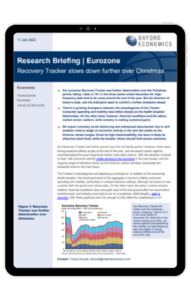
Our eurozone Recovery Tracker saw further deterioration over the Christmas period, falling 1.5pts to 79.1 in the three weeks ended December 26. High-frequency data tend to be noisy around the end of the year. But the direction of travel is clear, and the indicators seem to confirm a further slowdown ahead.
What you will learn:
- There’s a growing divergence between the subcategories of the Tracker. Consumer spending and mobility have fallen sharply as the health situation deteriorates. On the other hand, however, financial conditions and the labour market remain resilient, while industry is making sustained gains.
- We expect voluntary social distancing and widespread absenteeism due to self-isolation rules to weigh on economic activity in the next few weeks as the Omicron variant surges.
- Given its high transmissibility, the wave is likely be sharp but short-lived, while the booster rollout should limit severe outcomes.
Tags:
Related research

Post
APAC Key Themes 2026: Paybacks, policy offsets and trade
We believe APAC will remain the strongest global performer in 2026. However, the growth trajectory will likely be more uneven than in past cycles.
Find Out More
Post
Japan’s fiscal policy will remain loose, which increases risks to debt sustainabilit
We've changed our fiscal outlook for Japan in our December forecast round. We now expect the new government to set a primary deficit close to that of 2024, at 2%-3% of GDP for 2025-2027, instead of restoring a balanced budget by taking advantage of strong tax revenue. We assume higher bond yields will force the government to take measures to reduce the deficit from 2028.
Find Out More
Post
US Key Themes 2026: Exceptionalism amid fragmentation
US exceptionalism is alive and well, and that won't change in 2026.
Find Out More