
Five reasons why European CRE isn’t out of the woods yet
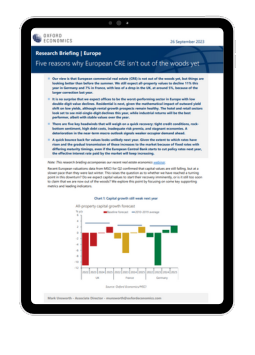
Our view is that European commercial real estate (CRE) is not out of the woods yet, but things are looking better than before the summer.
What you will learn:
- It is no surprise that we expect offices to be the worst-performing sector in Europe with low double-digit value declines. Residential is next, given the mathematical impact of outward yield shift on low yields, although rental growth prospects remain healthy.
- There are five key headwinds that will weigh on a quick recovery: tight credit conditions, rock-bottom sentiment, high debt costs, inadequate risk premia, and stagnant economies.
- A quick bounce back for values looks unlikely next year. Given the extent to which rates have risen and the gradual transmission of those increases to the market because of fixed rates with differing maturity timings, even if the European Central Bank starts to cut policy rates next year, the effective interest rate paid by the market will keep increasing.
Tags:
Related Posts

US Bifurcated ꟷ Economic backdrop deepens racial disparities
Black and Hispanic households have experienced more inflation than other groups since the reopening of the economy from the pandemic lockdowns. Although there've been many phases of high inflation, some have disproportionately hurt these minority groups, such as the jump in energy prices following Russia's invasion of Ukraine, with the ensuing surge in rental inflation further setting them back.
Find Out More
Real Estate Key Themes 2026: CRE deal recovery delayed, not derailed
Real estate is still poised for a revival in 2026. Although 2025’s deal recovery was delayed, the key fundamentals remain in place for renewed momentum.
Find Out More
Student housing makes the grade in Australia
Rising student demand and limited housing availability are pushing rents higher and reinforcing investor confidence in Australia’s student accommodation market.
Find Out More
Little by little—Manchester is closing the output gap
Greater Manchester has led the UK economy since 2008, driven by knowledge jobs, transport upgrades, and housing growth—but can prosperity reach its outer districts?
Find Out More