
Australia | A structural measure of the budget balance
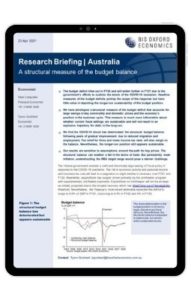
The budget deficit blew out in FY20 and will widen further in FY21 due to the
government’s efforts to cushion the shock of the COVID-19 recession. Headline measures of the budget deficits portray the scope of the response but have little value in depicting the longer-run sustainability of the budget position.
We have developed a structural measure of the budget deficit that accounts for large swings in key commodity and domestic prices and the economy’s position in the business cycle. This measure is much more informative about whether current fiscal settings are sustainable and will not result in an explosive trajectory for debt, in the long run.
What you will learn from this comprehensive 4-page report:
- The structural budget balance has deteriorated but appears sustainable
- Prices can drive large swings in nominal GDP growth
- Structural measures ‘look through’ volatility
- Nominal GDP exceeded its structural level for many years, boosting revenue
Tags:
Related Services

Post
Japan’s fiscal policy will remain loose, which increases risks to debt sustainabilit
We've changed our fiscal outlook for Japan in our December forecast round. We now expect the new government to set a primary deficit close to that of 2024, at 2%-3% of GDP for 2025-2027, instead of restoring a balanced budget by taking advantage of strong tax revenue. We assume higher bond yields will force the government to take measures to reduce the deficit from 2028.
Find Out More
Post
US Key Themes 2026: Exceptionalism amid fragmentation
US exceptionalism is alive and well, and that won't change in 2026.
Find Out More