
Japan: Covid-era ‘excess’ savings may be smaller than estimated
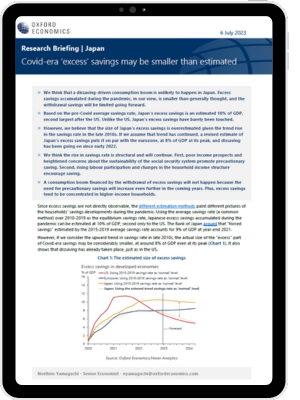
We think that a dissaving-driven consumption boom is unlikely to happen in Japan. Excess savings accumulated during the pandemic, in our view, is smaller than generally thought, and the withdrawal savings will be limited going forward.
Based on the pre-Covid average savings rate, Japan’s excess savings is an estimated 10% of GDP, second largest after the US. Unlike the US, Japan’s excess savings have barely been touched.
What you will learn:
- However, we believe that the size of Japan’s excess savings is overestimated given the trend rise in the savings rate in the late 2010s.
- We think the rise in savings rate is structural and will continue. First, poor income prospects and heightened concerns about the sustainability of the social security system promote precautionary saving. Second, rising labour participation and changes in the household income structure encourage saving.
- A consumption boom financed by the withdrawal of excess savings will not happen because the need for precautionary savings will increase even further in the coming years. Plus, excess savings tend to be concentrated in higher-income households.
Tags:
Related posts

Post
Japan’s politics add uncertainty to BoJ policy outlook
The Bank of Japan (BoJ) kept its policy rate at 0.5% at its October meeting, after a 7-2 majority vote. Two board members again voted for a rate increase. We believe the BoJ will hike in December to 0.75% as incoming data confirm that the economy is performing in line with the bank's forecasts in its quarterly outlook. However, there's a material chance of a delay.
Find Out More
Post
Japan’s December rate hike appears likely, though there is a risk of delay
We've brought forward the timing of the next Bank of Japan (BoJ) 25bps rate hike to December from next year and have added another 25bps hike in mid-2026. This reflects the surprisingly hawkish shift in the BoJ's view since its September policy meeting and upward revisions to our growth and inflation projections, driven by the US economy's resilience.
Find Out More
Post
BoJ announces cautious plan to sell ETF and J-REIT holdings
At its monetary policy meeting on Friday, the Bank of Japan (BoJ) unexpectedly announced it would start to sell its ETF and Japanese real estate investment trust (J-REIT) holdings. We think the impact of this plan on financial markets will likely be limited because the BoJ is opting to play it safe in terms of the process and the scale.
Find Out More