Research Briefing
| Jul 29, 2021
MENA | Oil prices stabilise, Tunisia’s crisis, Lebanon’s new PM
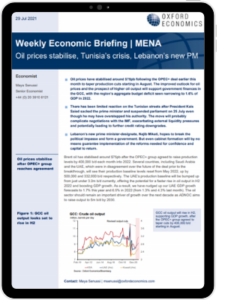
Oil prices have stabilised around $75pb following the OPEC+ deal earlier this
month to taper production cuts starting in August. The improved outlook for oil prices and the prospect of higher oil output will support government finances in the GCC, with the region’s aggregate budget deficit seen narrowing to 1.6% of GDP in 2022.
What you will learn from this report:
- There has been limited reaction on the Tunisian streets after President Kais Saied sacked the prime minister and suspended parliament on 25 July even though he may have overstepped his authority.
- The move will probably complicate negotiations with the IMF, exacerbating external liquidity pressures and potentially leading to further credit rating downgrades.
- Lebanon’s new prime minister-designate, Najib Mikati, hopes to break the political impasse and form a government. But even cabinet formation will by no means guarantee implementation of the reforms needed for confidence and capital to return.
Tags:
Related Services

Post
US Key Themes 2026: Exceptionalism amid fragmentation
US exceptionalism is alive and well, and that won't change in 2026.
Find Out More
Post
Global Key themes 2026: Bullish on US despite AI bubble fears
We anticipate another year of broadly steady and unexceptional global GDP growth, but with some more interesting stories running below the surface.
Find Out More[autopilot_shortcode]