
Merchandise trade is expected to deteriorate in 2023
After a surge in global merchandise trade in 2021, activity has slowed in 2022 due to several factors, including shifting consumption patterns, high commodity prices, rising interest rates and a slowdown in China. Merchandise trade in 2022 is still expected to be 9% higher than in 2019. However, a deteriorating outlook for world economic growth is expected to lead to an overall decline in merchandise trade over 2023.
What you will learn:
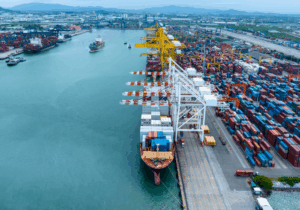
- Leveraging the insights derived from our new TradePrism service, we can see that growth in total merchandise trade over the last two years was driven by containerised trade. Containerised trade accounted for 83% of trade in real dollar values between the 46 major economies featured in TradePrism. These countries account for 88% of the global merchandise trade.
- Merchandise trade increased by around 11% over 2021 (as measured in constant prices and exchange rates), driven by a significant increase in spending for goods, low-interest rates and a shift in working from home leading to higher building construction expenditure. The level of merchandise trade seen in 2021 was around 5% above 2019 levels.
- Growth in merchandise trade is expected to slow over calendar 2022 due to a number of factors, including a shift from the consumption of goods back towards services as pandemic restrictions are eased, high commodity prices, rising interest rates and the slowdown in China. Still, we expect the overall merchandise trade to grow by a little under 4% over 2022.
- World growth is expected to be weak in 2023, with mild recessions expected across key advanced economies. High inflation, monetary policy tightening and, in many cases, falling house prices will adversely impact economic growth. The deterioration in world growth is expected to lead to a decline in merchandise trade over 2023.
Tags:
Related Resouces
Post
Asia Chip Export Index
Asia chip export index (CEI) showed a remarkable rise of 27.3% in value and 26.2% in volume year-on-year.
Find Out More
Post
The US is winning the tariff battle, but could lose the global war
The US has seen short-term gains from higher tariffs, with markets steady and growth holding up. But investment weakness, rising risks of inflation, and potential trade retaliation point to a tougher outlook ahead for both the US and global economies.
Find Out More
Post
Unpacking the August 1 Tariff package: What it means for global trade
Explore the impact of the August 1 tariff package on global trade. Discover how exemptions affect effective rates and the latest trends in seaborne volumes
Find Out More