
Working hours decline despite rising labour participation in Japan
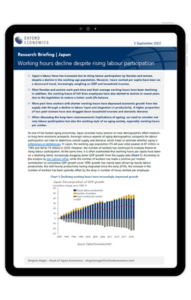 Japan’s labour force has increased due to rising labour participation by females and seniors, despite a decline in the working-age population. However, hours worked per capita have been on a downward trend, increasingly weighing on GDP and household incomes.
What you will learn:
- Most females and seniors work part-time and their average working hours have been declining. In addition, the working hours of full-time employees have also started to decline in recent years due to the legislation to restore a better work-life balance.
- More part-time workers with shorter working hours have depressed economic growth from the supply side through a decline in labour input and stagnation in productivity. A higher proportion of low-paid workers have also dragged down household incomes and domestic demand.
- When discussing the long-term macroeconomic implications of ageing, we need to consider not only labour participation but also the working style of an aging society, especially working hours per worker.
Tags:
Related posts
Post
Japan’s fiscal policy will remain loose, which increases risks to debt sustainabilit
We've changed our fiscal outlook for Japan in our December forecast round. We now expect the new government to set a primary deficit close to that of 2024, at 2%-3% of GDP for 2025-2027, instead of restoring a balanced budget by taking advantage of strong tax revenue. We assume higher bond yields will force the government to take measures to reduce the deficit from 2028.
Find Out More
Post
Japan’s politics add uncertainty to BoJ policy outlook
The Bank of Japan (BoJ) kept its policy rate at 0.5% at its October meeting, after a 7-2 majority vote. Two board members again voted for a rate increase. We believe the BoJ will hike in December to 0.75% as incoming data confirm that the economy is performing in line with the bank's forecasts in its quarterly outlook. However, there's a material chance of a delay.
Find Out More
Post
Japan’s December rate hike appears likely, though there is a risk of delay
We've brought forward the timing of the next Bank of Japan (BoJ) 25bps rate hike to December from next year and have added another 25bps hike in mid-2026. This reflects the surprisingly hawkish shift in the BoJ's view since its September policy meeting and upward revisions to our growth and inflation projections, driven by the US economy's resilience.
Find Out More