
Global construction costs to remain high in 2023
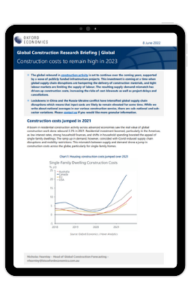
The global rebound in construction activity is set to continue over the coming years, supported by a wave of publicly funded infrastructure projects. This investment is coming at a time when global supply chain disruptions are hampering the delivery of construction materials, and tight labour markets are limiting the supply of labour. The resulting supply-demand mismatch has driven up construction costs, increasing the risks of cost-blowouts as well as project delays and cancellations.
Lockdowns in China and the Russia-Ukraine conflict have intensified global supply chain disruptions which means that input costs are likely to remain elevated for some time. While we write about national averages in our various construction service, there are sub-national and sub-sector variations. Please contact us if you would like more granular information.
What you will learn:
-
The global rebound in construction activity is set to continue over the coming years, supported by a wave of publicly funded infrastructure projects. This investment is coming at a time when global supply chain disruptions are hampering the delivery of construction materials, and tight labour markets are limiting the supply of labour. The resulting supply-demand mismatch has driven up construction costs, increasing the risks of cost-blowouts as well as project delays and cancellations.
- A boom in residential construction activity across advanced economies saw the real value of global construction work done rebound 2.3% in 2021. Residential investment boomed, particularly in the Americas, as low interest rates, strong household finances, and shifts in household spending boosted the appeal of single-family dwellings.
- Global supply chains have remained stretched since the middle of 2020 and, with strong consumer and industrial demand for goods, has driven a jump in global container shipping charter rates. The construction sector is much more exposed to transportation costs than other parts of the economy due to the relatively low value-to-weight ratio of construction materials.
Tags:
Related posts

Post
Australia’s Infrastructure Outlook: Big Shifts, Bigger Challenges
Australia’s infrastructure landscape is shifting fast, driven by new investment trends, emerging asset classes and growing capacity constraints. This outlook explores the major changes ahead and what industry and government must do to navigate the decade effectively.
Find Out More
Post
Construction labour shortages remain an entrenched challenge across Europe
Labour shortages remain an ongoing challenge across Europe, limiting firms’ ability to deliver a strong pipeline of work. 28% of construction firms are reporting that lack of personnel is limiting their output and 14% are intending to hoard labour in the next three months to minimise future risk.
Find Out More
Post
The hydrogen divide: a future fuel or a flawed fantasy in Australia?
Australia is poised to become a global leader in green hydrogen, leveraging renewables and innovation to unlock major export and investment potential.
Find Out More