
Travel and Tourism: Global Highlights & Risks
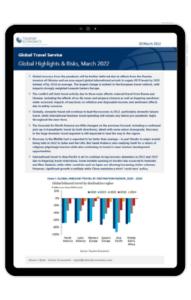
Global recovery from the pandemic will be further deferred due to effects from the Russian invasion of Ukraine and we now expect global international arrivals to regain 2019 levels by 2025 instead of by 2024 on average. The largest change is evident in the European travel outlook, with impacts strongly weighted towards Eastern Europe. The conflict will limit travel activity due to three main effects: reduced travel from Russia and Ukraine, including the effects of no-fly zones and airspace closures as well as lingering sanctions; wider economic impacts of sanctions on inflation and disposable income; and sentiment effects due to safety concerns.
What you will learn:
- Globally, domestic travel will continue to lead the recovery in 2022, particularly domestic leisure travel, while international business travel spending will remain way below pre-pandemic highs throughout the near-term.
- The forecasts for North America are little changed on the previous forecast, including a continued pick-up in transatlantic travel (in both directions), albeit with some minor downgrade.
- Recovery in the Middle East is expected to be faster than average – in part thanks to major events being held in 2022 in Qatar and the UAE.
Tags:
Related Services

Post
APAC Key Themes 2026: Paybacks, policy offsets and trade
We believe APAC will remain the strongest global performer in 2026. However, the growth trajectory will likely be more uneven than in past cycles.
Find Out More
Post
Japan’s fiscal policy will remain loose, which increases risks to debt sustainabilit
We've changed our fiscal outlook for Japan in our December forecast round. We now expect the new government to set a primary deficit close to that of 2024, at 2%-3% of GDP for 2025-2027, instead of restoring a balanced budget by taking advantage of strong tax revenue. We assume higher bond yields will force the government to take measures to reduce the deficit from 2028.
Find Out More